

Panama City Beach Turtle Watch Helps Protect One of the Gulf’s Most Amazing Visitors |
Discover the vital work of Panama City Beach's Turtle Watch program in preserving Gulf sea turtles. |
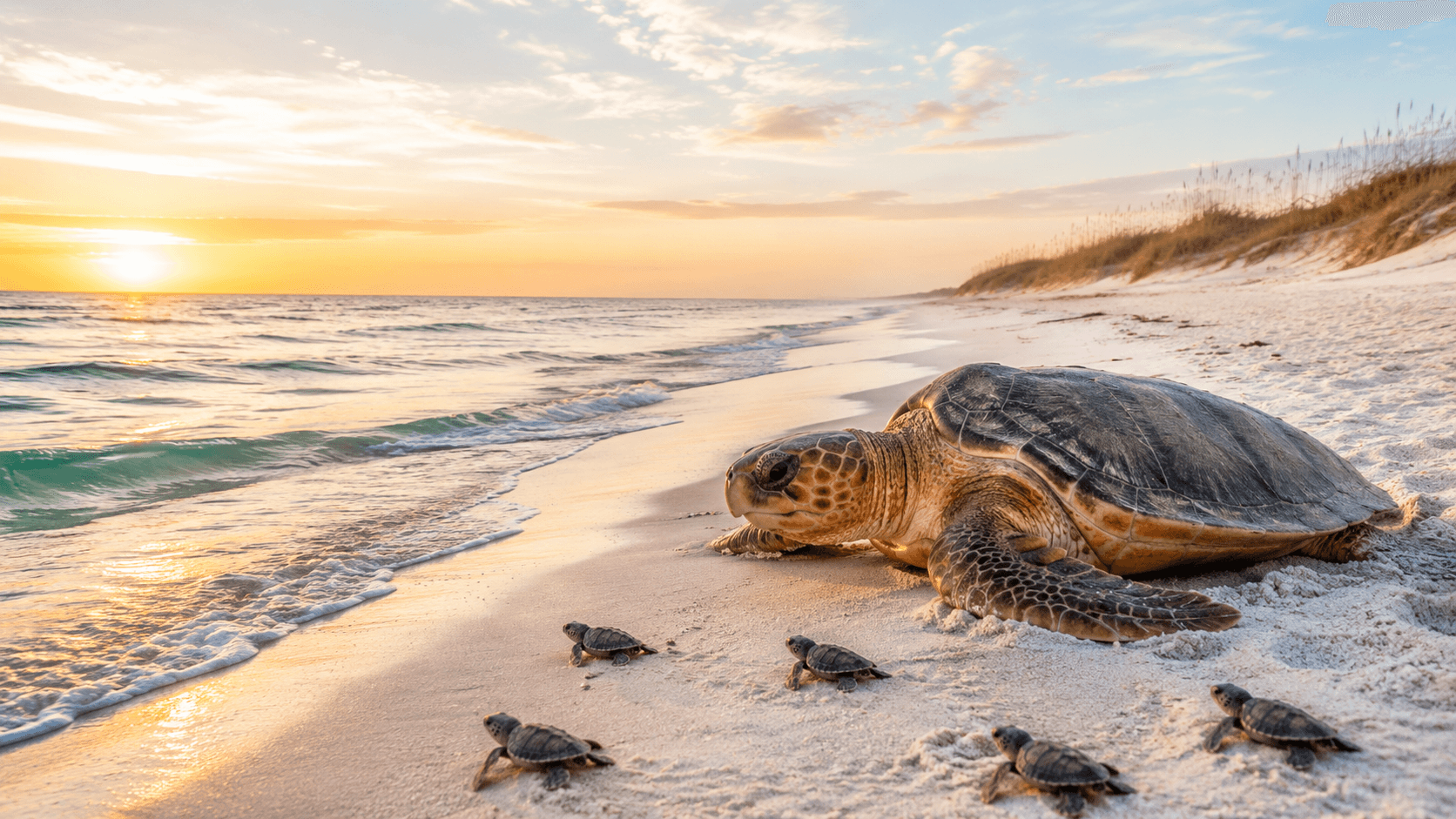
Every summer, Panama City Beach welcomes more than tourists, sunshine, and emerald Gulf views. It also becomes nesting ground for one of Florida’s most treasured coastal visitors: sea turtles.
Panama City Beach Turtle Watch is a local nonprofit volunteer organization https://turtlewatch.org dedicated to protecting nesting and hatching sea turtles along the beach. Created in 1991, the group works under state permits issued by the Florida Fish and Wildlife Conservation Commission and patrols the shoreline from St. Andrews State Park to Camp Helen State Park during sea turtle nesting season.
On Panama City Beach, the most common nesting sea turtle is the loggerhead. These powerful marine reptiles can grow to about three feet long and weigh between 200 and 350 pounds. Female loggerheads come ashore at night, crawl above the tide line, and dig a nest in the sand where they may lay around 100 leathery eggs. After about two months, tiny hatchlings emerge and begin their dangerous journey to the Gulf.
PCB also occasionally sees green sea turtles and leatherbacks. Leatherbacks are especially fascinating because they are the only sea turtle species without a hard shell. Instead, they have a flexible, leathery carapace and are known for long-distance migrations across the ocean.
Sea turtles spend most of their lives at sea, but adult females must return to land to lay their eggs. Scientists believe many females return to the same general beach area where they hatched decades earlier. That makes protecting nesting beaches especially important.
The biggest message for residents and visitors is simple: keep the beach clean, dark, and flat.
A clean beach means removing trash, food scraps, fishing line, beach toys, chairs, tents, and umbrellas before leaving for the day. These items can block nesting females or trap hatchlings trying to reach the water. Food scraps can also attract predators such as raccoons and birds.
A dark beach is just as important. Sea turtle hatchlings naturally move toward the brightest horizon, which should be the moonlight and starlight reflecting off the Gulf. Bright beachfront lights, flashlights, phone lights, and camera flashes can confuse hatchlings and send them in the wrong direction. Disoriented hatchlings may become exhausted, dehydrated, or fall victim to predators.
A flat beach helps turtles move safely. Holes in the sand and large sandcastles may seem harmless during the day, but at night they can become obstacles for nesting turtles and dangerous traps for hatchlings. Before leaving the beach, fill in holes and knock down sand structures.
If you see a nesting turtle, hatchlings, or a marked nest, admire from a distance and do not touch, crowd, shine lights, or use flash photography. If you see a nesting turtle or hatchlings on Panama City Beach, call Panama City Beach Police non emergency at 850-233-5000. For injured wildlife, call the Wildlife Hotline at 888-404-3922.
Sea turtles have survived for millions of years, but their future depends on the choices people make today. By keeping Panama City Beach clean, dark, and flat, locals and visitors can help give these incredible animals the best chance to nest, hatch, and return to the Gulf.
Interesting Facts:
|


FICA Tax Tip Credits for Restaurant Owners |
|

📺 Panama City Spotlight YouTube https://www.youtube.com/@PanamaCitySpotlight
🎬 YouTube Playlists https://www.youtube.com/@PanamaCitySpotlight/playlists
👍 Like and Follow us on Facebook: https://www.facebook.com/PanamaCitySpotlight
👥 Join our Facebook Group: https://www.facebook.com/groups/PanamaCitySpotlight
🍴 Panhandle Fork - Like and Follow us on Facebook: https://www.facebook.com/PanhandleFork
🍴 Panhandle Fork - Join our Facebook Group: |

0 Comments
Join the conversation
Be the first to comment
Share your thoughts above.